
Canada's Choice
It's about looking at the facts, more than just one issue, and most crucially: the future.

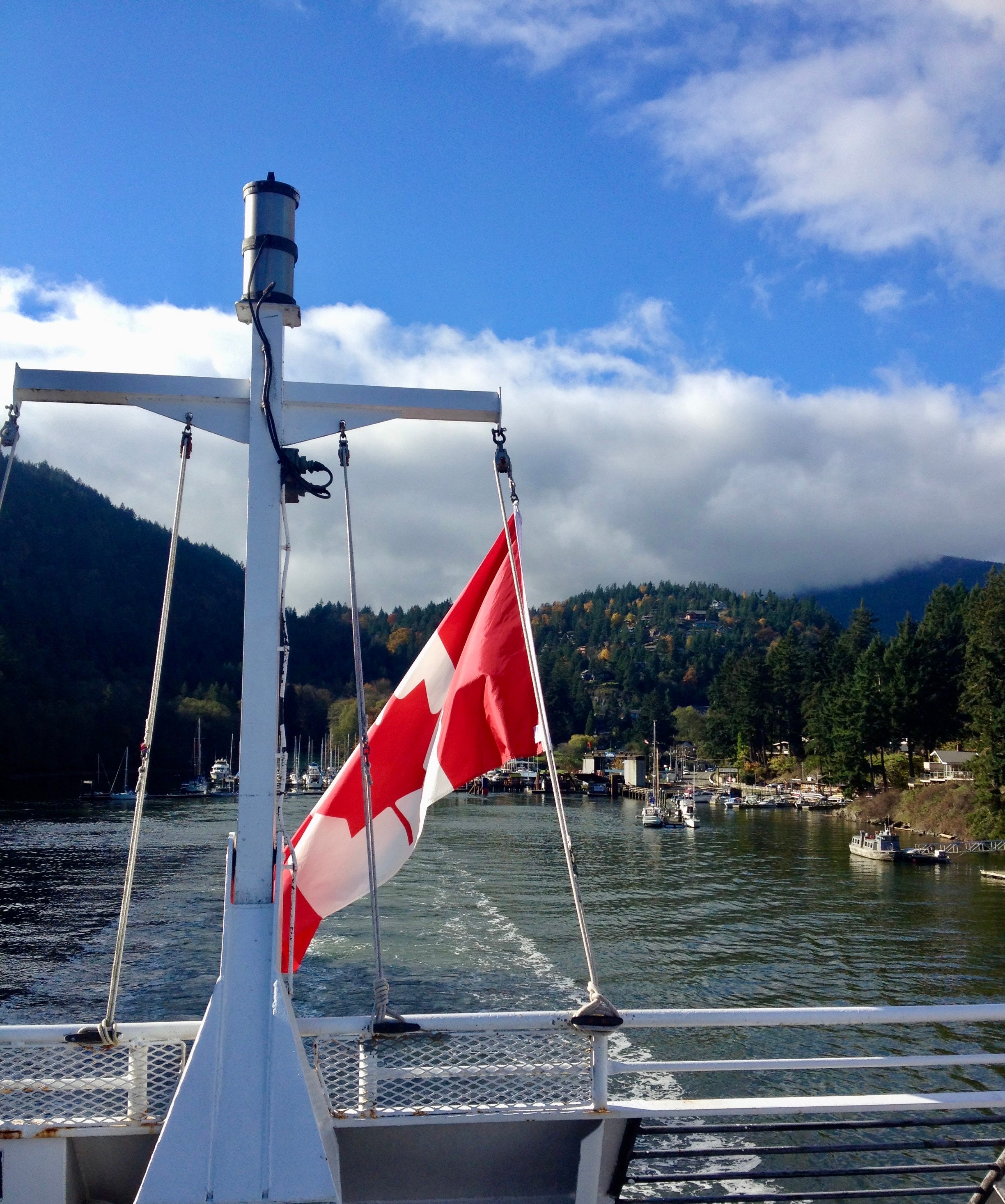
Canada is gearing up for one of its most divisive federal elections, pitting the incumbent Liberals under Mark Carney against Pierre Poilievre’s Conservative party. Through a constitutional gimmick the Liberals managed to swap the deeply unpopular Justin Trudeau for the tested bureaucrat and seasoned investment banker, Carney. Yes, he is the prime minister now.
Given the fiscal and political mess that Trudeau has left behind and the resulting broad discontent in Canada one would expect that, like in any functioning democracy, the opposition would clean out the election and comfortably cruise to a win. Not so in Canada where fear mongering and obfuscating the truth is a time tested campaign tactic that has historically serviced the Liberals best. This was about to come to an end with an easy Conservative win - as per the polls - until Donald Trump unleashed his torrent of tariffs and accompanying rhetoric of making Canada the 51st state. It was all the Liberal Party needed to scare the living daylights out of Canadians. And by putting forward the indeed seasoned Carney as the economic genius who would guide Canada to ride out the storm, it turned all polling data and electoral logic upside down. With one week to go to election day the race is now too close to call and the Liberals may eke out yet another win.
The fear apparently is so deep that, and I just have to scroll my social media pages, that the most hardcore left wingers are now arguing the merits of Carney’s bond trading strategies and economic smarts. This is a guy who made his bones at Goldman Sachs. It is unreal to see how to public mood has shifted from confidence to one of fear and that also tells us that a lot of Canadians are overreacting and looking away from what is really going on. There are a few points to be made here.
First, the economic battle with the US has taken over all other issues that have been ailing Canada. Gone is a real debate over the future, immigration, healthcare, policing the internet, the country’s diminished role internationally, the gross incompetence and all the scandals that have Liberal’s name firmly printed on it. And a lot of that blemished record actually has Carney’s name on it as well, he was an adviser, even an architect, of former prime minister Trudeau’s now disparaged policies. Yet all issues and critical questioning have somehow been subordinated to the genius of Carney.
Secondly, no matter Carney’s economic intellectual horsepower, we are in different times, there are no historic comparables. Canada does not need only a reactive roadmap to address Trump’s antics, but a solid plan that addresses the problems created by Trudeau while mapping out a future for Canada’s next generation. Dealing with Trump is only a sub-set of that bigger agenda, yet that is what the Liberals are now largely campaigning on.
Quite the contrary, he may drive Canada deeper into the ditch as he just announced a solution to bring the economy back on track: more borrowing, more spending and thus more interest payments into an ever ballooning deficit. Remember Liz Truss, the UK prime minister who was turfed out of office after 44 days? What Carney presented a few days ago is not materially different from what Truss put forward and what ended her political career. More borrowing without ‘costing’ it, which is to say, not making clear where the money is really coming from. In all likelihood it will have to eventually come from ordinary Canadians.
Part of this is distorting reality. And some 40% of Canada’s electorate prefers to be lulled into a sense of complacency and half-truths. This is also why Conservatives have a hard time clinching a lead: they much rather give you the unvarnished reality and are loath to give Canadians half-baked truths and rosy scenarios.
Much like his predecessor Carney delivers different messages to different audiences which may be a great electoral strategy, but in the end it is unclear where he stands and in the process he has divided Canadians. Pipelines and natural resource development is one such area, Israel and Gaza another. He championed a carbon tax, but he has now walked away from it. Issues that need clarity are obfuscated, yet somehow the man is presented as having the clearest vision as to how to move Canada forward nationally and globally.
And the party that celebrates science and facts when discussing climate is all too willing to look away from areas where clear evidence plays an equally important role. A great example is how Liberals still castigate Harper’s conservative government (2006-15) for increasing retirement benefits age to 67 which Trudeau mysteriously brought back to age 65. Somehow this was a mean spirited move and it has made its way back into the current campaign more than ten years later. This apparently is a grave injustice. But you just can’t deny that Canadians live longer and healthier lives and that demographic pressures mean increasing financial burdens, so lengthening retirement windows in small increments is a simple and very logical approach. The Dutch - among the most progressive of liberal democracies - are increasing the age beyond 67 now, increasing it annually by 3 months. Why? Because it makes sense. But not in Canada where you somehow can’t present stark realities because if you do, you might lose an election.
Here is another one. The Conservatives in addressing the housing crisis, brought up the fact that younger people are increasingly postponing having children and buying homes and in doing so run into the ticking biological clock. Yet, the outrage from Canada’s left leaning parties (Liberals and NDP) was swift and intense as somehow Poilievre’s statements were demeaning to women. How? Believe me, we all age rapidly and have our biological clocks running and it is zero fun. But it is a hard fact when you are planning your finances, your mortgage, kids and eventual retirement. It’s basic math. And governments actually need these data to effectively plan and hopefully fix the housing and affordability crises.
These were just a few examples but they underscore how you can paper over life’s inconveniences, borrow money to keep everyone quiet and have the Liberal power machine remain in place for another cycle. In the meantime Conservatives are painted as the bogeyman - they are going to cut programs - but they will only do what is necessary to try and balance the books, do what the government can afford and bring back fiscal sanity while creating a path forward with or without having Trump next door.
Ten years of Liberal government under Trudeau have set an entirely new benchmark for post-truth behaviour. Trudeau himself would never engage directly with journalists, whatever the question he would pan out a prepared politically safe statement. He would also walk away from hard choices and paper things over with more borrowed money to keep Canada quiet and happy. Carney who came in at the very last minute will continue what he helped create and is unlikely to bring on the harder choices and difficult decisions that Canada needs to make. This election is not about left or right, or between progressives and traditionalists. Given the uncertainty all around us it is about breaking with the past and placing a bold bet on the future. Seven days from now we will learn if a majority of Canadians was willing to make it.
Thank you, Pieter, for your excellent column on Canada’s upcoming election. I strongly agree with your assessment of the Liberal government’s decade-long failures, marked by corruption, incompetence, and policies like internet and media censorship that have only deepened Canada’s social challenges. Your point about Mark Carney’s rebranding of the same flawed cabinet resonates—it’s like rearranging deck chairs on the Titanic.
The fear of Trump’s rhetoric shouldn’t overshadow the Liberals’ dismal record, especially on the economy and immigration. Their immigration policies, with inadequate vetting and unsustainable volume, strain housing, healthcare, and social cohesion, as seen in the appalling antisemitic displays in public spaces and in the streets of Canada. It’s a canary in the coalmine and the canary is struggling to breath. Re-electing the Liberals will hasten Canada’s decline, and your article aptly calls for a bold break from this path.
Voting for change is vital for a functioning democracy. A decade of failures and ossification of the economy is evidenced in Canada’s abysmal ranking at the bottom of the OECD for GDP per capita growth. Canada was never, ever at the bottom of 60 countries!
Regardless of opinion on Pierre Poilievre and the CPC, voting for change when necessary is crucial for a functioning democracy. If you value Canada's independence, a free media, and a strong economy, consider voting CPC.
Thank you again for exposing these critical issues. Canadians must confront the unvarnished reality, as you’ve urged, and not fall for Carney’s misleading promises. Your piece is a vital wake-up call ahead of Canada’s most critical election in our lifetimes.
We will see if Canadians continue to immediately and comprehensively dismiss any weakness in Canada when they go to the polls.